

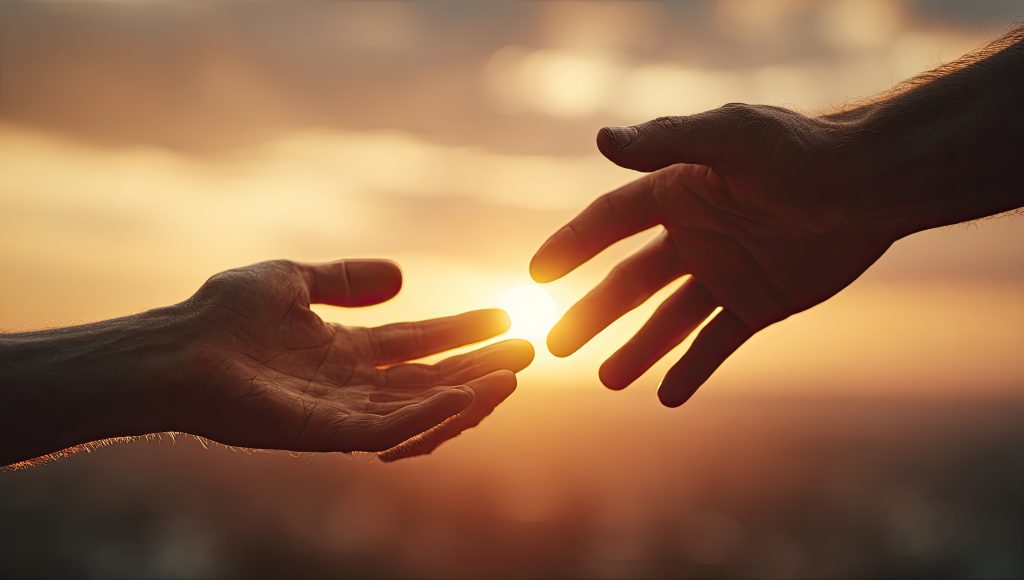

I had an interesting experience regarding a word that I hadn’t given much thought to.
In passing a friend said, “I am borrowing energy from the future to complete this job and I know it will take me solid time to recover.”
Borrowing?!! From your own reserve of energy? So you become your own lender and borrower. And you even pay ‘interest’ because of the resultant fatigue that you might suffer!
Borrowing – as we normally understand it
I had considered borrowing as an act where we take something from the lender, for temporary use, with the understanding and intention of returning it. Or, acknowledging it, if it had to do with, for example, an idea.

At a very basic level there is the finance aspect of borrowing money, various types of debts and the like.
Here we will try to explore the word a little differently.
My friend’s statement opened up a whole new dimension to the word ‘borrow’ for me. At the ground level and also at a philosophical realm.
Building on borrowed matter
The more I thought about it, I realised that what we are, actually stands on borrowed matter. We build on a foundation of knowledge that was created by others. So it is borrowed, not to return perhaps, but to develop further. Or return it with the ‘interest’ of added value. The important aspect to remember is to acknowledge what was borrowed with humility.

Even if we are to refute it, we are borrowing the thought, analysing it, doing our own research and then challenging it.
Borrowing is a part of a rhythm
The cycle continues. Of receiving through borrowing and then giving back. Nature does it seamlessly. It does not hold on. The underlying principle is interdependence.
- A cloud depends on / borrows water from rivers and oceans and then gives it back.
- Plants borrow the sun’s energy and along with other ingredients make food only to give back in some other form.
- The human body itself borrows water, air and nutrition from nature and then goes back to earth. We inhabit a body for a limited time and perhaps the interest we are expected to pay is to look after it.
- We do not own time. Every moment is given to us to use the way we choose to.
Time, borrowed from the universe, is possibly the most invaluable, due to its very nature of not being storable; and so not retrievable.
There is Interdependence when borrowing
In the ‘transaction’ of the lender and the borrower, whichever role we may be playing (and in life we play both roles all the time), most often, both need each other.
- A bank needs clients to give loans to and a client needs a source to borrow funds from.
- A scientist needs his or her research to reach people; and a borrower who cites this, needs the information to validate a point.
There is a need; and there is a need to be needed.
Borrowing is a two way process
Quite obviously just as we are constantly borrowing, knowingly or unconsciously, we too are being borrowed from.
People borrow time from us; and we hear people say, “Thank you for lending me your time.”
”May I borrow some of your thoughts on this topic please?”
It makes us accountable for what we are lending.
Thoughts on returning what we borrow
There is of course the ethics of returning what we borrow – the material things. Someone has a book we wish to read. We borrow it and ensure returning it.
With borrowing comes the underlying responsibility of looking after it; and returning it in the same condition that we received it. Or in a better condition.
Rima borrowed a sari from her cousin. She discovered it was stained, but could use it without the stain being visible. She then returned the sari after getting it dry cleaned; and ensuring that it was stain free!
But everything is not a material product that is borrowed; and that can be returned as is. It can take on a different form.
A music teacher lent time and talent to a pupil to teach him play an instrument, without charging anything. The pupil returned it, by teaching another person for free!
Roshan borrowed his friend’s idea of setting up a charitable toy library. He then built on it; and, along with the friend, went on to develop the library further; into a space for free tuition classes, for students who needed help.
The borrowed seed idea grew into a much bigger movement.
Risks involved with borrowing
This has some fascinating ramifications. This is in no way an exhaustive list, but pointers to make us reflect on the subject.
Unrealistic visions
Particularly in today’s social media directed lives, we ‘borrow’ visions of lifestyles, dreams, aspirations and do a patchwork of them on ourselves. Most often, they do not sit well.
We cannot synthesize with them organically; and so we cannot really ‘own’ them. The end result is one of added pressure and stress. And at the end of it all, we may be left with a niggling regret, of not having actually lived our own life.
Confusion about our own identity
We also borrow views and opinions from influencers or those we might admire, but we cannot generate them from within us. In discussions, we cannot substantiate these opinions because they were never really ours; or we never really felt strongly about them.
They remain mere cosmetics that can be seen through. So we end up sounding inauthentic. It results in us being confused about our own identities.
Costs us freedom
Most borrowings at some level cost us freedom. Financial borrowing ties us to a repayment schedule along with interest.
A borrower will have a relationship with a lender and is tied to an accountability there. If the promise or the assurance is not honoured from either side it creates mistrust.
I remember a line I read. “Ask yourself before borrowing. Will it help me expand or will it enslave me?”
Mistaking what we borrow as what we own
Attachment to what we borrow as ownership and forgetting that it is temporary, has its challenges. It is wise to remember that we have borrowed for the purpose of use; and we simply need to look after it or build on it.
Being over ambitious
Over ambitious borrowing could lead to bankruptcy, if the loan repayments cannot be met.
Being cautious about the source from which we borrow
Just as we have to be vigilant about which source we are borrowing money from, similarly, in other areas too, as a borrower we need to be cautious who our lender is.
For example, we randomly borrow ‘facts’ and ‘studies’ from the internet to substantiate our arguments, when in reality those facts could be fake.
There are three parts to the borrowing process.
Before borrowing: Ask ourselves why we are borrowing it. Is it necessary? What are the hidden and obvious costs (both materially and emotionally)? Is the source genuine?
After Borrowing: Be grateful for what we borrow; look after it, use it judiciously.
Later: Return it according to the understanding with the lender, acknowledge it. If not possible to return it materially, use it to add value or build on it to pass on its benefits.
So, take a pause and reflect! What are you borrowing? From whom? And how do you intend returning it?
Check out Sumita Banerjea’s book Script Your Life Your Way, with a large collection of articles written for InfinumGrowth, along with self work exercises. The book is available on Amazon.

Wish to work on your thoughts and feelings? Connect with an experienced Counsellor/Psychotherapist from InfinumGrowth who will help clear your thoughts in a safe and confidential conversation.

Please do leave your comments at the bottom and do share with others if you like this article.







A wonderful perspective. I think about this a lot. One of my English teacher’s friends was a class 12th pass out and wasn’t employed. He married a girl and got a piece of land. He borrowed money from banks and his friends and built a 3 storey house. Sold 2 floors and became financially stable and then a renowned builder in town. Makes one think. Everything was borrowed here.
In the grand scheme of things, I believe we always borrow more than we give back. I also believe that even our body is borrowed from nature for one life time.
Thank you Abhishek for your insightful feedback. I look forward to the added value you bring to the articles with your observations
Very interesting and thought provoking article.
Thank you Kaushika for your feedback.