

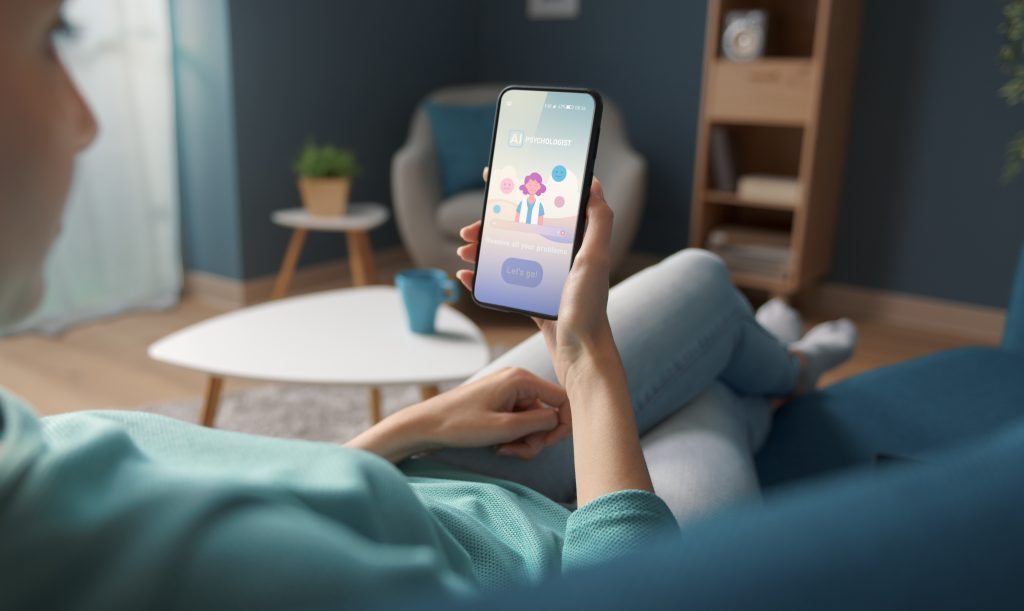

If you have been turning to AI for “therapy”, do take a moment and read this.
The question is not whether AI can be helpful. In some ways, it can.
The more important question is whether AI therapy can offer the things that actually enable us to heal.
When we look more closely at what therapy is, and what makes it therapeutic, there are a few reasons why it may not.
1. Importance of non-verbal cues in the therapeutic process
When you visit a therapist or any mental health professional, they assess your mental health, not just by the content or the words that you use to describe your present difficulties, but more importantly they tune in to your non-verbal cues – the tone of your voice, the speed of your words, your breathing, your body language, your eye movements, the way you use your hands – and so much more.
Therapists are trained to look for discrepancies between the content (what you say) and your being (the way you are). This is crucial in developing a deeper understanding of what may be happening underneath your conscious awareness and in helping you see what is really going on for you. These non-verbal cues provide the therapist with information to understand where the conflicts may be sitting for you, and thereby help you see them too.
AI Therapy can be remarkably useful in helping people reflect, organise their thoughts, and even articulate feelings that may otherwise remain unspoken. But it is still working primarily with the information you provide. Even with advances in voice and language technology, it has limited access to the full richness and complexity of your experience in the way that another human being, trained to interpret and make sense of the unsaid, can.
So even the starting point for AI Therapy, as a substitute for a human therapist, is fundamentally restricted.

2. What heals in therapy is not just the techniques but the human relationships
Even more important is to have a better understanding of what enables the healing in therapy.
Of course techniques and skills matter, but that is only a small fraction of the pie.
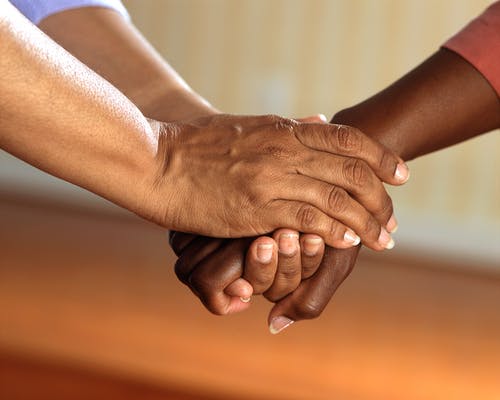
What heals is the relationship with the therapist.
Most of us spend a lot of our lives carrying around hurt, pain, guilt, sadness, anger, and unprocessed conflicts – never having felt safe enough to acknowledge any of it, let alone feel or express it.
In a therapy room, you find that safe space, that safe relationship, where you can begin to show those parts of yourself that you have kept hidden. Maybe even from yourself.
You experience another human being in a very different way; and you experience your own presence with another human being in a different way. That is when the parts of you that felt so dark, so unbearable, begin to get some light.
It is a light that is reflected off two people and what they create together – a very human connection. AI may be able to simulate aspects of a therapeutic conversation, offer thoughtful reflections, or even help you feel understood in a moment. But simulation and relationship are not the same thing.
Therapy is not simply about receiving responses.
It is about being in relationship with another person and discovering what emerges within that relationship.
3. Risk of AI therapy reinforcing unhelpful beliefs and increasing isolation
But I think there is something deeper sitting underneath this, which may be helpful to look at.
Part of the reason AI therapy may feel easier than human therapy is that it removes some of the things that many of us find most difficult – being seen, risking vulnerability, sitting with discomfort in the presence of another person.
This can also increase the risk of AI becoming our primary place of emotional refuge, which may keep us one step removed from the very thing we are longing for – genuine human connection. And in doing so, it may quietly reinforce some of the deeply internalised, unhelpful beliefs many of us carry: “Nobody understands me”, “I will always be alone”, or “I am not good enough”.
For some people, AI may be a helpful first step towards therapy. It may help them find language for their experiences, explore difficult emotions, or build enough confidence to eventually reach out for support. But it remains a first step, not the journey.
At some point, healing often asks more of us.
It asks us to bring ourselves into relationship.
To risk being seen.
To discover what happens when another human being stays present with our pain, our fears, our shame, our grief, and our contradictions.
Because so often the deepest wounds were formed in relationship, and healing happens in relationship too.
And no, it does not make you weak or broken.
Yes, it is bloody difficult to sit with a complete stranger and be vulnerable.
Yes, it takes tremendous courage.
But once you can connect to that courage, even just a little bit, the journey forward can be deeply rewarding and empowering.
It feels like you can finally exhale, long and slow, when you did not even know you were holding your breath.
Like this article? Please leave your views in the comments section below.
Neha Rungta is a Counsellor/Therapist on InfinumGrowth’s panel. Click here to book an appointment with her.

Please do leave your comments at the bottom and do share with others if you like this article.







Excellent and insightful
Totally resonate with you about the human touch. In fact, it’s true of training and coaching too. I am a trainer, facilitator and coach currently doing my basic TA. Many companies who put training on the back burner since AI happened are coming back to us because of that very important human element which just cannot be replicated in AI.
Very well written and an article that touches the right chord. AI at the end of the day is something that humans have created and therefore as you have rightly put it cannot replace human connection and emotions.