


In 1835, aboard the HMS Beagle, Charles Robert Darwin arrived on the Galápagos Islands. Amongst other specimens, he collected some birds too, from the islands, for research purposes. Later in London, he gave the bird specimens to John Gould, the ornithologist, for identification. Gould identified 13 distinct finch species unique to the islands. They shared a common ancestor but their beak shapes differed.
Depending on the food available on the island, the beaks had different shapes and sizes. They could be short and stout for cracking seeds found on the ground, long and pointed for picking seeds out of cactus fruits, or sharp and thin to catch insects.
It was a fascinating discovery that made Darwin realize that species are not fixed. They change over time to suit their environment.
In his well known book, On the Origin of Species, he spoke about adaptation and evolution through natural selection. To survive and reproduce, adaptation was necessary.
What is adaptation?
According to some journals the word adapt has its origin in the Latin word adaptare. It means to fit or to modify.
The main goal in adaptation for us humans, in leading our regular life, and in Nature’s biological adaptation, is to survive and function better in a changing scenario.
At an individual level for us, it is the process of gradually changing our mindset, attitude and behaviour, to better suit the changing environment or the reality around us. This can be achieved by deliberately and consciously keeping up with technology, being open to ‘unlearning’ certain habits that are no longer relevant, making the effort to keep our minds open to new learning.
During Covid 19 for example, changed circumstances compelled humans to think differently about how to conduct their lives.
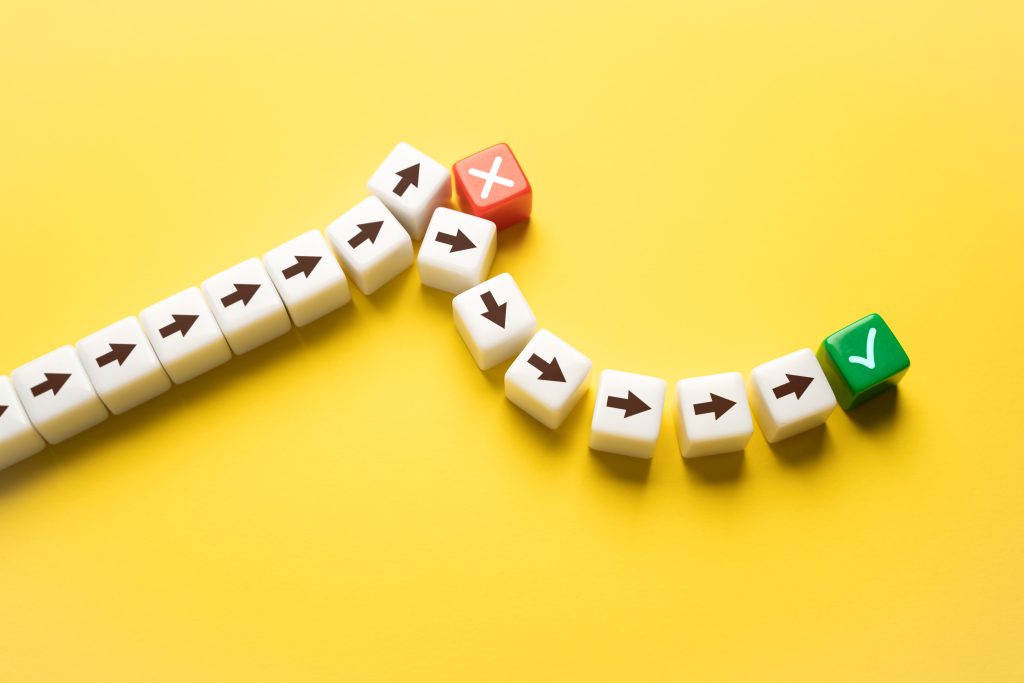
We cannot order reality to change.
Natural selection in Nature is a more involved and a slower process. Adaptation happens over generations, when a helpful trait becomes prominent in the whole group.
These biological adaptations are a part of evolution, because organisms can pass on this change to their offspring to increase its chances of survival. Like it did with the beaks in the finches.
Nature has several other examples of how plants and animals have adapted over time.
It has been studied that there are three main types of adaptation – physiological (internal bodily processes), behavioral (actions that are inherited or learned) and structural (physical body features).
For this article we will focus on the behavioral, and at a deeper level, the psychological in us humans.
Adaptation – in a reality where change is the only constant
We have heard this phrase often. Practically nothing remains the same. Our bodies, our expectations, our relationships, our experiences – in other words our reality.
The challenge is :
Do we fight this change and resist it? Can we fight this change? Will the change stop? Will there be someone to rescue us when we stay stuck? Do we keep complaining about the change? Can we simply ignore it and hope that the change blows over?
Or
Do we accept that things will change and we learn to adapt to them for a more peaceful transition?
The truth is that even adaptation is constant, like change. Both need to walk hand in hand.
Examples of Adaptation
Accepting and learning new technology, changing our expectations from our own self over time and from relationships, adapting to a changed lifestyle, to demands in a community living environment, or new work environments and working cultures……… all are examples of Adaptation we all do.
As someone told me, “I cooperate with required changes to ultimately make my life easier.”
What happens if we refuse to adapt?
What if the Galapagos finches had failed to adapt? They would have, in all probability, perished, resulting in their local extinction.
For us humans, who do not adapt, the result would perhaps not be quite as dramatic. Life would progress on its path but it could become painful and stressful for those of us who refuse to budge.
We become obstacles in our own growth towards achieving our own potential. Resisting change could result in stagnation.
And ultimately we could become irrelevant.
Being open to learning keeps us cognitively active. Shutting down may lead to cognitive decline.
Changed circumstances throw up challenges, but also new opportunities. Staying rigid and refusing to adapt could result in missing out on them.
We may become sad and bitter and remain isolated, watching life go by. In other words we could stop engaging and participating, keep complaining about the present and talk about how good things were in the bygone days.
Some reasons why we resist adaptation
A story comes to mind.
Mr and Mrs V lived in a large double storeyed house with space and independence. Then the inevitable happened. The children moved to other destinations. Age crept up and managing the sprawling lifestyle was difficult. Security was becoming an issue, as was getting reliable house help.
Looking ahead, the sensible option was winding down and moving into a small gated community where there were people around, common amenities that had been outsourced to an external management, better security.
It would give them the freedom to travel when they wished to, use the facilities without worrying about their upkeep.
They would have to adapt to less space and not have the complete independence of a personal bungalow.
The idea made them fearful and rigid beliefs kicked in. Breaking out of the comfort zone required huge effort. How would they cope and adjust? It would become claustrophobic moving out of their comfort zone, living amongst so many other people? The immediate worries blocked them from looking ahead.
How does life change, when we adapt?
- It helps build a quiet confidence.
- The willingness itself to adapt when the need arises, clears fear. Flowing with the movement keeps one in motion.
- When faced with change, a person open to adapting will stay calmer, suffer less, be less stressed.
- Being calmer and so, more stable, in a changing environment, helps the person absorb better and be more useful to those around, instead of spreading unrest and panic.
How do we shift a rigid mindset to one of willingness to adapt?
- Consciously seek out people, preferably in your age group, who have happily embraced adapting to changes and are leading a fuller life because of this.
- If adapting to new technology is an issue, get professional help and take lessons to get over the fear. Then use this knowledge in small measures till confidence grows. Mistakes are a part of the learning.
- Change is natural. Treat it as an ally for growth and not an enemy to fight.
- Be curious. It makes one want to learn and discover. Change questions from ‘Why do I have to do this?’ to ‘What can I learn through this that will be of use to me?’
- Make small changes. They gradually make us ready to embrace bigger ones. Experiment with new cuisines. Learn something new. Include people in your circle who think differently from you and listen to their views. Travel. It will open you to new ideas, creating the ground to become less rigid inside you.
- Release habits, views, expectations that have outgrown their use. It creates space to accept change.
Changing your view about something is not always a sign of fickleness. It could be an indication that you are open to new ideas if you find them convincing and are willing to grow.
Can we become too adaptable?
The answer lies in the extent to which we adapt.
Holding on to our basic needs, principles and core values is important.
If adaptability makes us vulnerable to going to any extent to please, fit in or follow the Joneses, chances are that at the end of it we would be unhappy with ourselves and probably have lost ourselves in the bargain.
It can be emotionally exhausting and make us very unhappy, if we keep shifting to meet external demands of relationships, work and society.
We have to make well thought out choices of how our decision will pan out for us in the future.
Ask yourself – Does it make me more aligned to changes while protecting my internal compass and comfort level or does it erase my identity?
Adaptability, Flexibility, Adjustability, Compromise
Each of these, though in the same spectrum, mean something different.
Adaptability – The impact is more long term. It involves learning, evolving and impacts our thoughts and behaviour. Example: accepting new technology and using it.
Flexibility – This is more short term. Think of a reed that moves with the strong breeze so that it does not snap. People can be flexible about food choices, changes in appointments and the like. There is no deep change in lifestyle or thinking.
Adjustability – Here again there is no long term transformation but it is a practical tool for efficiency, team work and things that require minor changes. It could mean adjusting the height of a table or adjusting to different timings at work.
Compromise – This is largely to do with relationships or settling differences by coming to a mutual agreement where each party is willing to give in a little bit to find a common ground.
Darwin’s finches are examples of natural selection and adaptive radiation.
Embracing change for growth and evolution, adapting our skills to changing situations and finding our own uniqueness, all contribute to living fuller lives.
Valuable life lessons from Galapagos!
Like this article? Here’s a book of short stories, published recently by author Sumita Banerjea, which might be of interest.
Chowringhee Charms – Timeless Tales from the East

Wish to work on your thoughts and feelings? Connect with an experienced Counsellor/Psychotherapist from InfinumGrowth who will help clear your thoughts in a safe and confidential conversation.

Please do leave your comments at the bottom and do share with others if you like this article.







The article – Adaptation: Life Lessons from Galapagos Finches, is really written so nicely. The explanation on – Adaptability, Flexibility, Adjustability, Compromise, summarizes the article so well.
Thanks very much Anindita for your feedback. Yes the four words have distinct meanings and it seemed important to explain that.
Very interesting article . I wish a whatsapp group could be formed of persons who may not be known to one another but can ask for support and offer support on emotional , change related and evening age related questions and problems.
Hello Shushmita,
Thank you for your comments and suggestions on support groups.
At InfinumGrowth our goal is to provide different ways to help people manage life issues and improve their skills. While we have articles, counselling, therapy and group therapy services and training programs, we also have a monthly free program called Infinum Evenings which addresses different topics on personal growth.
We would certainly like to understand what you have in mind regarding the WhatsApp group.
Please feel free to connect with us at contact@infinumgrowth.com ; we would be glad to see how we could help.
Thanks
Sridhar Rao
Thank you Shushmita for your feedback and your suggestion. Yes it is a great idea to have such a group. We could talk about this and take it forward.
Truely interesting. With time we understand the value of these terms Adaptability, Flexibility, Adjustability, Compromise, that the author has discussed beautifully. I could very well connect it with life, how important what she said. Sharing this article with my friends.
Am grateful to you Monali for your feedback. Am happy that you have shared it with others. InfinumGrowth has other articles too which you may find interesting.
A wonderful perspective of incorporating the classical scientific concept of natural selection and adaptibility into our daily lives.
Thank you Smita for your comment. Nature is truly wondrous !